
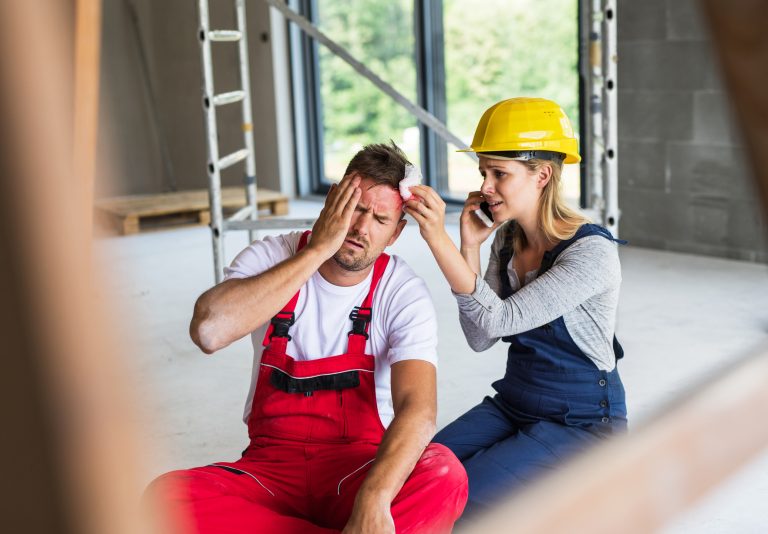
Most people picture football players knocked out on the field when they think about concussions. But these head injuries aren’t just for athletes; they’re the most common type of traumatic brain injury (TBI) and can happen to anyone.[1] A slip and fall, a car accident or hitting your head just right on your kitchen cabinet can leave you with a concussion.
Even mild concussions can disrupt brain function, causing headaches, dizziness, memory and concentration problems, balance issues, mood swings, and sleep disturbances—making work, school, and daily tasks challenging.[2;3]
So, do I need to see a neurologist? The answer depends on your symptoms, how long they last, and whether you notice any red flags.
What Is a Concussion, Really?
A cerebral concussion happens when a sudden bump, blow, or jolt causes the brain to move rapidly inside the skull.[4] You can get a concussion even without a direct blow to the head.[3]
Even a mild concussion is severe. You may “see stars” or feel like you’ve “had your bell rung”.[4] When your brain bounces around, it causes chemical changes and temporary damage to brain cells [5], leading to symptoms such as headaches, dizziness, confusion, fatigue, or sensitivity to light and noise.[6]
Most people recover quickly, but some take days or weeks to restore normal brain function and feel like themselves again.[4]
Do All Concussions Require a Neurologist?
Not necessarily. Most mild concussions improve with rest, hydration, and a gradual return to regular activity. [3]
You should consider seeing a neurologist if:
- Symptoms haven’t improved within a few days [2]
- Headaches, dizziness, or concentration problems linger [7]
- You’ve had multiple concussions [2]
- You have existing neurological conditions like migraines, seizures, or ADHD [8]
- Mood changes, sleep problems, or fatigue develop after the injury [2]
For most non-emergency cases, the ideal window to follow up with a neurologist is 48–72 hours after the injury.[9] By then, they can evaluate how your brain is healing and determine if further testing or treatment is needed.
How a Neurologist Can Help Your Concussion or Mild Traumatic Brain Injury
Seeing a neurologist doesn’t mean your concussion is severe—it means a specialist is ensuring your brain heals properly. Concussions can affect memory, judgment, reflexes, speech, balance, and coordination, making daily activities like driving, working, or learning more difficult.[2;10]
A neurologist may perform a detailed neurological exam, order imaging if needed, and use cognitive testing to check thinking skills, coordination, and reaction time.[3; 10] For persistent or worsening symptoms, they can diagnose and treat post-concussion syndrome (PCS), using medications, therapies for dizziness, vision, or cognitive issues, and rehabilitation planning.[3; 6]
They also guide crucial steps (or protocols) to return to work, school, or sports, ensuring you only resume activities when it’s safe, reducing the risk of setbacks or long-term complications. [6; 7]
Neurologists Manage Your Concussion Protocol
Concussion protocols aren’t just for NFL players—they’re for anyone with a head injury. Recovery timelines vary, so a neurologist monitors progress and ensures a safe return to daily life once symptoms are fully resolved, following step-by-step guidelines or protocols to prevent setbacks or long-term complications like PCS.[2]
Post-Concussion Syndrome: Let Your Neurologist Know if Symptoms Stick Around
Most concussions improve within a couple of weeks, but some people continue to struggle with headaches, dizziness, memory problems, fatigue, or mood changes. Persistent symptoms may indicate PCS.[3;11] Even mild injuries can have lasting effects. Neurologists can rule out other causes, manage symptoms, coordinate therapies, and suggest strategies to improve concentration, mood, and daily functioning.[11]
Repeated concussions can increase the risk of PCS, Chronic Traumatic Encephalopathy (CTE), and neurodegenerative diseases such as Alzheimer’s or Parkinson’s later in life.[12]
Avoid a Delay in Healing a Head Injury: Consult a Neurologist for Concussion Recovery
Even mild concussions can disrupt your brain and daily life. While many people recover with rest and basic care, a neurologist ensures your symptoms are monitored, complications are addressed, and recovery stays on track.
Your neurologist or concussion specialist can evaluate lingering issues, manage post-concussion syndrome, guide a safe return to work, school, or sports, and help protect long-term brain health. Early follow-up can prevent persistent problems and reduce the risk of future neurological complications.
Don’t Ignore Lingering Concussion Symptoms
Concussion taking too long to heal? If headaches, dizziness, or memory problems stick around, see a neurologist. Early treatment can help you recover safely and return to your everyday life without setbacks.
Disclaimer: This blog is intended for educational and informational purposes only and is not a substitute for professional medical advice, diagnosis, or treatment. If you suspect a severe head injury or concussion, call 911 or go to the ER if you experience loss of consciousness, repeated vomiting, worsening headache, seizures, vision or hearing changes, clear fluid from the nose or ears, trouble waking, weakness, slurred speech, confusion, or sudden behavior changes. These may signal a severe brain injury that cannot wait for a routine neurology visit.
For parents: If your child or teen may have a concussion, stop all activity and seek medical care right away. They should only return to school or sports once they have been cleared by a healthcare provider experienced in concussion care.
Resources:
- Concussion Basics. HEADS UP – CDC [Internet]. Published January 7, 2025. Accessed September 5, 2025. Available from: https://www.cdc.gov/heads-up/about/index.html
- Agarwal N, Thakkar R, Than K. Concussion. American Association of Neurological Surgeons – AANS [Internet]. Published April 29, 2024. Accessed September 5, 2025. Available from: https://www.aans.org/patients/conditions-treatments/concussion/
- Concussion – Symptoms and Causes. Mayo Clinic [Internet]. Published February 17, 2022. Accessed September 5, 2025. Available from: https://www.mayoclinic.org/diseases-conditions/concussion/symptoms-causes/syc-20355594
- Concussion. Cleveland Clinic [Internet]. Accessed September 5, 2025. Available from: https://my.clevelandclinic.org/health/diseases/15038-concussion
- Facts about Concussion and Brain Injury. Brainline [Internet]. Accessed September 5, 2025. Available from: https://www.brainline.org/article/facts-about-concussion-and-brain-injury
- Kutcher JS, Giza CC. Sports concussion diagnosis and management. Continuum (Minneap Minn). 2014;20(6 Sports Neurology):1552-1569. doi:10.1212/01.CON.0000458974.78766.58 Accessed September 5, 2025. Available from: https://pmc.ncbi.nlm.nih.gov/articles/PMC4274165/
- Clark CN, Edwards MJ, Ong BE, et al. Reframing postconcussional syndrome as an interface disorder of neurology, psychiatry and psychology, Brain [Internet]. Volume 145, Issue 6, June 2022, Pages 1906–1915, https://doi.org/10.1093/brain/awac149 Accessed September 5, 2025. Available from: https://academic.oup.com/brain/article/145/6/1906/6574496
- Persistent post-concussive symptoms (Post-concussion syndrome). Mayo Clinic [Internet]. Accessed September 5, 2025. Available from: https://www.mayoclinic.org/diseases-conditions/post-concussion-syndrome/diagnosis-treatment/drc-20353357
- Womble M. Concussion Recovery: When Should You See a Doctor? Inova News Room [Internet]. Published May 29, 2019. Accessed September 5, 2025. Available from: https://www.inovanewsroom.org/expert-commentary/2019/05/concussion-recovery-when-should-you-see-a-doctor/
- Traumatic brain injury (TBI). National Institute of Neurological Disorders and Stroke [Internet]. Published 2024. Accessed September 5, 2025. Available from: https://www.ninds.nih.gov/health-information/disorders/traumatic-brain-injury-tbi
- Post-Concussion Syndrome. Cleveland Clinic [Internet]. Accessed September 5, 2025. Available from: https://my.clevelandclinic.org/health/diseases/24900-post-concussion-syndrome
- Understanding the Link Between Concussions and Neurological Disorders. Atlanta Neuroscience Institute. Published September 21, 2023. Accessed September 5, 2025. Available from: https://atlneuroinstitute.org/blog/understanding-the-link-between-concussions-and-neurological-disorders/#