
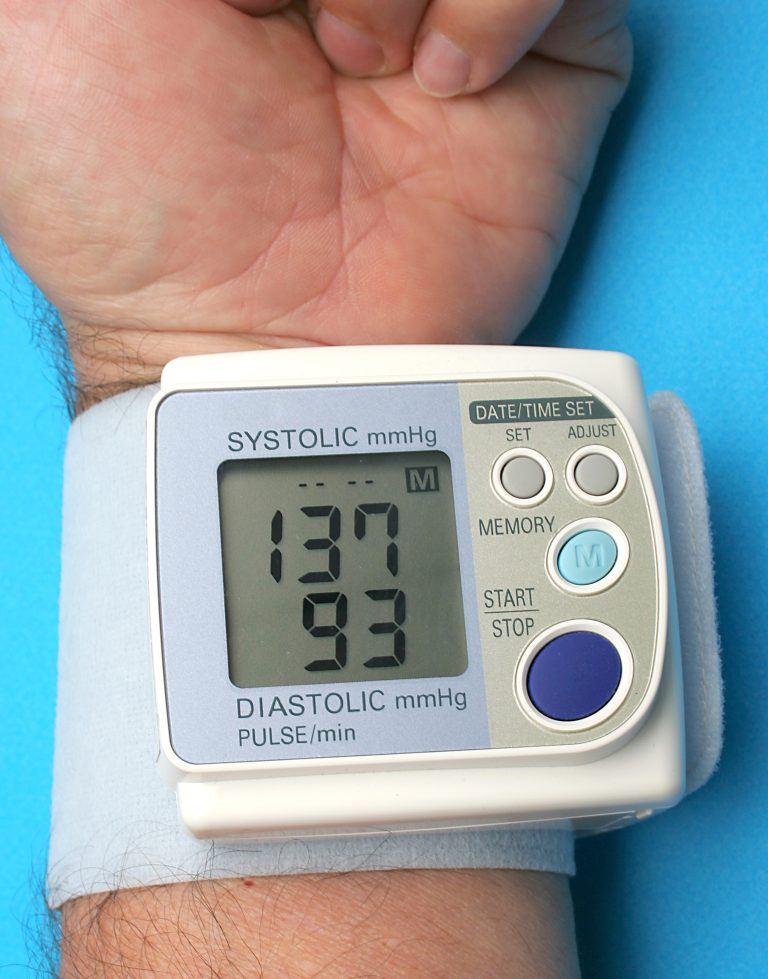
Certain neurological disorders can cause both high and low blood pressure.
When your doctor mentions “blood pressure issues,” you most likely think about your heart or cardiovascular health. But the truth is, your brain and nervous system play a much bigger role in controlling your blood pressure (BP) than you think.
Your autonomic nervous system (ANS) constantly tells your heart how fast to beat and when your blood vessels can relax.[1] When those signals are disrupted by neurological disease or nerve damage, blood pressure can become unpredictable.
Some neurological conditions can cause high blood pressure, low blood pressure, or sudden fluctuations between the two.[2] Understanding this connection can help explain symptoms like dizziness, fainting, headaches, or fatigue that sometimes accompany neurological disorders.
How Your Nervous System Regulates Blood Pressure Behind the Scenes
Have you ever stood up quickly and felt lightheaded? Your nervous system signals blood vessels to tighten so your BP doesn’t drop and make you faint.[3] When this communication between the brain, nerves, and cardiovascular system breaks down, blood pressure control becomes unstable.
Blood pressure regulation is controlled by the autonomic nervous system (ANS), the part of the nervous system that manages automatic bodily functions such as heart rate, digestion, sweating, and circulation.[4]
The ANS has two main branches:
Sympathetic nervous system: increases heart rate and raises blood pressure during stress or activity
Parasympathetic nervous system: slows heart rate and helps lower blood pressure during rest. Together, these systems constantly adjust blood pressure to meet your body’s needs at any moment.[5]
Neurological Conditions That May Be Causing Your BP Issues
Several neurological disorders can interfere with the nerve signals that regulate blood pressure. Some conditions affect the autonomic nerves directly, while others affect brain regions involved in blood pressure control.
Here are several neurological conditions that can affect blood pressure:
Autonomic Neuropathy and Blood Pressure Changes
Autonomic neuropathy occurs when nerves that control automatic body functions become damaged. These nerves regulate heart rate and blood pressure so that damage can cause dizziness, fainting, or abnormal BP swings.[6]
Dysautonomia and Blood Pressure Regulation Problems
Dysautonomia refers to disorders where the autonomic nervous system does not function properly. Because this system helps regulate circulation, patients may experience sudden drops in blood pressure or difficulty maintaining stable BP levels.[4]
Parkinson’s Disease and Orthostatic Hypotension
People with Parkinson’s disease may develop autonomic dysfunction over time. This can lead to orthostatic hypotension, in which blood pressure drops when standing, causing lightheadedness or fainting.[7]
Multiple System Atrophy (MSA)
Multiple system atrophy is a progressive neurological disorder strongly associated with autonomic nervous system failure. Severe blood pressure fluctuations are common.[8]
Stroke or Brain Injury-Related BP Changes
Damage to brain regions responsible for cardiovascular regulation can disrupt the signals that regulate blood pressure, leading to instability or hypertension.[2]
Sometimes neurological disorders cause low blood pressure when you stand, a condition called orthostatic hypotension. When that happens, you might feel dizzy, lightheaded, or like the room is spinning.[3]
Other times, the nervous system can push blood pressure the other way. Overactive nerve signals may contribute to hypertension (high blood pressure) by causing blood vessels to tighten more than they should.[9]
Symptoms That Might Suggest a Neurological Blood Pressure Problem
When blood pressure problems involve the nervous system, symptoms may feel different from those of typical cardiovascular hypertension.
Possible symptoms of neurological blood pressure problems or autonomic dysfunction include:
- Dizziness or lightheadedness when standing
- Fainting or near fainting
- Sudden drops in blood pressure
- Unexplained blood pressure spikes
- Fatigue or weakness
- Blurred vision
Sometimes these symptoms appear suddenly, especially when changing positions, such as moving from sitting to standing. When the autonomic nervous system isn’t responding properly, the body may struggle to adjust circulation quickly enough to maintain stable blood pressure. That delay can trigger dizziness, lightheadedness, or even fainting.
These symptoms may occur because the body is struggling to adjust circulation quickly enough during position changes or physical activity.[3]
If blood pressure fluctuations occur alongside neurological symptoms such as numbness, tremors, balance problems, or nerve pain, a neurological cause may need to be evaluated.
Why the Brain–Blood Pressure Connection Matters
The relationship between the brain and blood pressure works both ways. Just as neurological disorders can affect blood pressure, uncontrolled blood pressure can also impact brain health over time.[1]
According to cardiovascular and neurological research, long-term high blood pressure can increase the risk of several brain-related conditions, including:
- Stroke
- Cognitive decline
- Vascular dementia
- Progressive brain degeneration [1; 9]
Researchers continue to explore how long-term changes in blood pressure may contribute to neurodegenerative diseases and age-related brain changes.[10]
That’s one reason neurologists often look at cardiovascular health when evaluating neurological symptoms.
When Blood Pressure Symptoms Might Mean It’s Time to See a Neurologist
If you experience frequent dizziness, fainting, unexplained swings in blood pressure, or symptoms that occur when standing, it’s time to tell your doctor.
Neurological testing may help determine whether the autonomic nervous system is involved. Tests may evaluate how your heart rate and blood pressure respond to changes in posture, breathing, or stress.[11]
Blood pressure regulation is not just a heart issue—it’s also a neurological one. When the brain and nerves that control circulation are affected, your blood pressure may not respond the way it should. Understanding how the brain and nervous system influence blood pressure can help you recognize symptoms and know when to seek care. Early evaluation can help determine whether neurological factors are contributing to changes in blood pressure.
Disclaimer: This blog is intended for educational and informational purposes only and is not a substitute for professional medical advice, diagnosis, or treatment. Always consult your physician, neurologist, or other qualified healthcare provider with any questions you may have regarding a medical condition or treatment. Do not disregard professional medical advice or delay seeking it because of something you read on this blog.
Resources:
- Blood pressure and your brain. Harvard Health [Internet]. Published June 30, 2022. Accessed March 10, 2026. Available from: https://www.health.harvard.edu/heart-health/blood-pressure-and-your-brain
- Turana Y, Shen R, Nathaniel M, Chia YC, Li Y, Kario K. Neurodegenerative diseases and blood pressure variability: A comprehensive review from HOPE Asia. J Clin Hypertens (Greenwich) [Internet]. 2022 Sep;24(9):1204-1217. doi: 10.1111/jch.14559. PMID: 36196471; PMCID: PMC9532897. Accessed March 10, 2026. Available from: https://pmc.ncbi.nlm.nih.gov/articles/PMC9532897/
- Metzler M, Duerr S, Granata R, Krismer F, Robertson D, Wenning GK. Neurogenic orthostatic hypotension: pathophysiology, evaluation, and management. J Neurol [Internet]. 2013 Sep;260(9):2212-9. doi: 10.1007/s00415-012-6736-7. Epub 2012 Nov 20. PMID: 23180176; PMCID: PMC3764319. Accessed March 10, 2026. Available from: https://pmc.ncbi.nlm.nih.gov/articles/PMC3764319/
- Dysautonomia. Cleveland Clinic [Internet]. Accessed March 10, 2026. Available from: https://my.clevelandclinic.org/health/diseases/6004-dysautonomia
- Hughes TM, Sink KM. Hypertension and Its Role in Cognitive Function: Current Evidence and Challenges for the Future. Am J Hypertens [Internet]. 2016 Feb;29(2):149-57. doi: 10.1093/ajh/hpv180. Epub 2015 Nov 11. PMID: 26563965; PMCID: PMC4989128. Accessed March 10, 2026. Available from: https://pmc.ncbi.nlm.nih.gov/articles/PMC4989128/
- Autonomic neuropathy – Symptoms and causes. Mayo Clinic [Internet]. Published 2018. Accessed March 10, 2026. Available from: https://www.mayoclinic.org/diseases-conditions/autonomic-neuropathy/symptoms-causes/syc-20369829
- Mansukhani MP, Covassin N, Somers VK. Neurological Sleep Disorders and Blood Pressure: Current Evidence. Hypertension. 2019 Oct;74(4):726-732. doi: 10.1161/HYPERTENSIONAHA.119.13456. Epub 2019 Sep 3. PMID: 31476906; PMCID: PMC6872192. Accessed March 10, 2026. Available from: https://pmc.ncbi.nlm.nih.gov/articles/PMC6872192/
- Kurosaki H, Nakahata K, Donishi T, Shiro M, Ino K, Terada M, Kawamata T, Kaneoke Y. Effects of perinatal blood pressure on maternal brain functional connectivity. PLoS One [Internet]. 2018 Aug 28;13(8):e0203067. doi: 10.1371/journal.pone.0203067. PMID: 30153298; PMCID: PMC6112678. Accessed March 10, 2026. Available from: https://pmc.ncbi.nlm.nih.gov/articles/PMC6112678/
- Mansukhani MP, Covassin N, Somers VK. Neurological Sleep Disorders and Blood Pressure. Hypertension [Internet]. 2019;74(4):726-732. doi:https://doi.org/10.1161/hypertensionaha.119.13456 Accessed March 10, 2026. Available from: https://www.ahajournals.org/doi/10.1161/HYPERTENSIONAHA.119.13456#
- Newcomb B. Rapid Blood Pressure Fluctuations Linked to Early Signs of Brain Degeneration in Older Adults. USC Leonard Davis School of Gerontology [Internet]. Published October 29, 2025. Accessed March 10, 2026. Available from: https://gero.usc.edu/2025/10/29/blood-pressure-brain-degeneration/
- Autonomic neuropathy – Diagnosis and treatment. Mayo Clinic [Internet]. Published July 7, 2022. Accessed March 10, 2026. Available from: https://www.mayoclinic.org/diseases-conditions/autonomic-neuropathy/diagnosis-treatment/drc-20369836