
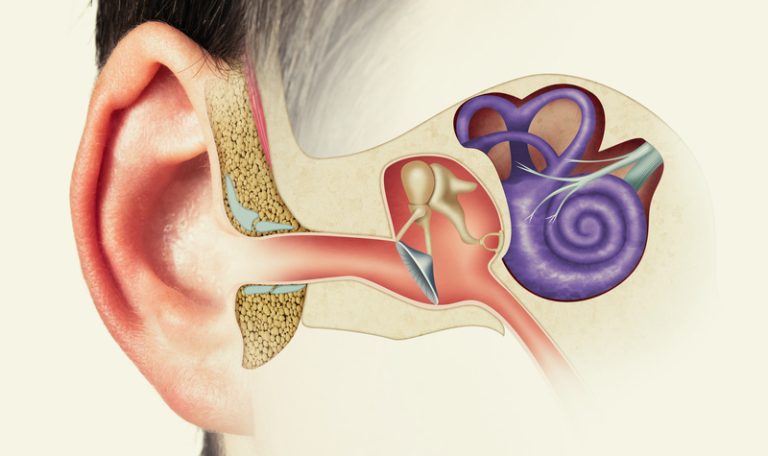
When you think about balance problems, dizziness or vertigo might be the first things that come to mind. But vestibular disorders can go much deeper than that. Many people don’t realize these conditions can also impact memory, focus, mood and even trigger anxiety, depression, or post-traumatic stress.
The brain is a marvel of interconnected systems, constantly communicating to keep your thoughts, emotions, and physical movements in sync. When the vestibular system is disrupted, it doesn’t just affect your balance; it can throw off your brain’s overall sense of stability. That disruption can ripple into your cognitive and emotional health in ways that are often unexpected.
The Vestibular System and Its Role in Brain Function
Your vestibular system, located in the inner ear, does more than just keep you balanced—it helps your brain understand where you are in space. It sends constant updates about your head position and motion, working closely with your eyes, muscles, and joints to support balance, coordination, and spatial awareness.[1]
Conditions like benign paroxysmal positional vertigo (BPPV), vestibular migraine, labyrinthitis (inner ear infection) or Meniere’s disease often cause these symptoms, and they can affect more than just your balance.[2]
When this system isn’t working correctly, it can disrupt more than just your physical stability. Vestibular dysfunction is also linked to changes in cognitive function and emotional well-being.[3; 4] This kind of brain imbalance can affect your ability to think clearly, concentrate, remember information, and solve problems.[5] Emotionally, it may contribute to anxiety, depression, irritability, and even personality or behavioral changes.[5]
Managing Neuropathy at Home: What You Can Do Daily
Managing neuropathy doesn’t start and stop at your doctor’s office. What you do at home every day can have a significant impact on how you feel. Here are some science-backed ways to support your nerve health and feel more in control:
Brain Fog, Memory Lapses, and Trouble Focusing
Feeling mentally “off” is surprisingly common with vestibular disorders. Many people describe a kind of brain fog where it’s hard to focus, find words, or remember things. This isn’t your imagination.
Research indicates that vestibular dysfunction can affect brain areas associated with attention, spatial memory, and executive function.[3; 4] The brain is working overtime to compensate for the faulty balance input, leaving fewer mental resources for everything else.
Anxiety, Depression, and Emotional Ups and Downs
Living with dizziness or imbalance isn’t just frustrating—it can be emotionally exhausting. Studies show that people with vestibular disorders often experience heightened levels of anxiety and depression.[6]
Here’s why:
Fear of falling or losing control can make people withdraw from daily activities
- Uncertainty and misdiagnosis can lead to feelings of helplessness or fear
- Vestibular symptoms themselves can mimic anxiety, making it hard to tell what’s what [7]
This emotional burden can become a vicious cycle—dizziness triggers anxiety, and anxiety can make dizziness worse.
Social and Lifestyle Impacts
Cognitive and emotional challenges often spill over into everyday life. People with vestibular disorders may find it hard to:
- Keep up with work or school due to mental fatigue
- Socialize or drive, especially if they fear vertigo attacks
- Stay active, leading to physical deconditioning and even more imbalance [8]
These challenges can also take a toll on personal relationships. Loved ones may struggle to understand the invisible and fluctuating nature of vestibular symptoms. This can lead to frustration, isolation, or even conflict at home. One study found that patients reported significant distress over feeling misunderstood or perceived as unreliable, which can damage trust and communication with family and friends.[9; 8]
Support, education, and open dialogue are essential—not just for the patient, but also for their support system.
Breaking the Cycle of Vestibular Disorders and Brain Imbalance
Vestibular dysfunction can feel like a frustrating loop of dizziness, anxiety, brain fog, and back again. But these symptoms aren’t “just in your head”; they’re rooted in fundamental neurological changes.
Tell your neurologist if you’re struggling emotionally or mentally. Treatments like vestibular rehab, cognitive behavioral therapy, or medication for anxiety or migraine can help address both physical and mental symptoms.[10]
With the proper care, it’s possible to break the cycle, rebalance your brain, and start feeling like yourself again.
Restoring the Mind-Body Connection with Neurology
Vestibular disorders aren’t just about balance; they can affect how you think, feel, and function day to day. From brain fog to mood swings, these symptoms are real and treatable. With the proper care and support, you can start to feel steadier in both body and mind.
Disclaimer: This blog is for informational purposes only and is not a substitute for medical advice. Discuss any ongoing neurological or nerve-related symptoms with your healthcare provider. Seek emergency care for sudden, severe headache, double vision, slurred speech, sudden hearing loss, fainting, numbness or weakness in the face or limbs, trouble walking, chest pain, vision loss, seizure, persistent vomiting, or high fever with neck stiffness are all red flags that may signal something more serious than a vestibular disorder.
Resources:
- Vestibular System. Cleveland Clinic [Internet]. Accessed July 27, 2025. Available from: https://my.clevelandclinic.org/health/body/vestibular-system
- Booth S, Shawna S. What Are Vestibular Disorders? WebMD [Internet]. Reviewed December 19, 2023. Accessed July 27, 2025. Available from: https://www.webmd.com/brain/vestibular-disorders-facts
- Smith PF, Zheng Y, Horii A, Darlington CL. Does vestibular damage cause cognitive dysfunction in humans? J Vestib Res [Internet]. 2005;15(1):1-9. PMID: 15908735. Accessed July 27, 2025. Available from: https://pubmed.ncbi.nlm.nih.gov/15908735/#
- Smith LJ, Wilkinson D, Mayur Bodani, Surenthiran SS. Cognition in vestibular disorders: state of the field, challenges, and priorities for the future. Frontiers in Neurology [Internet]. 2024;15. doi:https://doi.org/10.3389/fneur.2024.1159174. Accessed July 27, 2025. Available from: https://www.frontiersin.org/journals/neurology/articles/10.3389/fneur.2024.1159174/full
- Cognitive Impacts of Vestibular Disorders. Vestibular Disorders Association [Internet]. Published February 10, 2024. Accessed July 27, 2025. Available from: https://vestibular.org/article/coping-support/psychology/cognitive-impacts-of-vestibular-disorders/#
- Cognitive Impacts of Vestibular Disorders. Vestibular Disorders Association. Published February 10, 2024. Accessed July 27, 2025. Available from: https://vestibular.org/article/coping-support/psychology/cognitive-impacts-of-vestibular-disorders/#
- Bayat A, Hoseinabadi R, Saki N, Sanayi R. Disability and Anxiety in Vestibular Diseases: A Cross-Sectional Study. Cureus [Internet]. 2020;12(11):e11813. Published 2020 Nov 30. doi:10.7759/cureus.11813. Accessed July 27, 2025. Available from: https://pmc.ncbi.nlm.nih.gov/articles/PMC7781499/#
- Bilgrei R. The Psychology of Vestibular Disorders: Part II: Emotional Aspects of Vestibular Disorders. Vestibular Disorders Association – VEDA. Accessed July 27, 2025. Available from: https://vestibular.org/sites/default/files/page_files/Documents/Emotional-Aspects-of-Vestibular-Disorders__Part2_57.pdf
- Chen X, Wei D, Fang F, et al. Peripheral vertigo and subsequent risk of depression and anxiety disorders: a prospective cohort study using the UK Biobank. BMC Medicine. 2024;22(1). doi:https://doi.org/10.1186/s12916-023-03179-w. Accessed July 27, 2025. Available from: https://bmcmedicine.biomedcentral.com/articles/10.1186/s12916-023-03179-w
- Innovations in Vestibular Testing and Treatment. Cleveland Clinic [Internet]. Accessed July 27, 2025. Available from: https://my.clevelandclinic.org/podcasts/head-and-neck-innovations/innovations-in-vestibular-testing-and-treatment#