
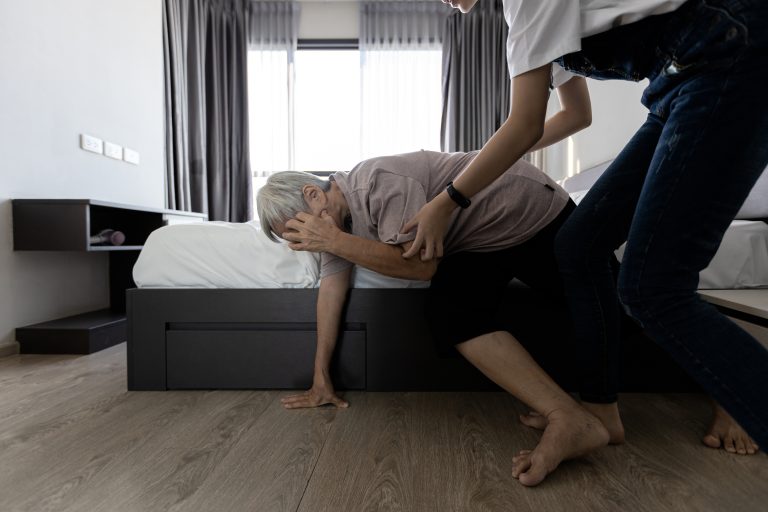
Frequent dizziness or feeling unsteady can be unsettling, especially when you’re not sure what’s causing it. If you feel like the world around you is spinning or the ground is moving when you’re not, your neurologist might recommend a videonystagmography (VNG) test. This simple, non-invasive test helps uncover how well your inner ear and brain work together to control balance and eye movements.
VNG Test Measures Eye Movements to Check Balance and Inner Ear Function
Videonystagmography: hard to pronounce, easier to explain. A videonystagmography, or VNG, is a series of tests used to evaluate how your eyes and inner ear (vestibular system) work together to maintain balance and steady vision.[1] During the test, you’ll wear lightweight goggles equipped with tiny cameras that record your eye movements while you follow moving lights or change head positions. Small, uncontrolled eye movements, or nystagmus, provide important clues about how your brain processes signals from your balance system.[2]
According to E3 Diagnostics, your provider might perform a few different parts of the VNG, including:
- Oculomotor testing, to check how your eyes move and track visual targets
- Positional testing, to see if changes in your head or body position cause dizziness
- Caloric testing, which gently stimulates the inner ear with warm and cool air or water to observe balance responses
Together, these steps help pinpoint whether your dizziness or balance issues come from your inner ear, brain, or visual system.[3]
When Is a Videonystagmography Test Recommended?
VNG testing is typically ordered when you have persistent dizziness, vertigo, or imbalance that other causes can’t explain.[1] Since balance involves coordination between your eyes, ears, and brain, problems in any of these areas can lead to symptoms that affect your daily life.[2: 4]
You may benefit from a VNG test if you experience any of the following:
1. Recurrent Dizziness or Vertigo
If the room seems to spin around you or you feel like you’re moving when you’re not, you might be experiencing vertigo, a common reason for VNG testing. [1; 4] The test can help determine if vertigo stems from an inner ear disorder, such as benign paroxysmal positional vertigo (BPPV), vestibular neuritis, or Ménière’s disease. [2; 5]
2. Unexplained Balance Problems or Falls
Feeling off-balance, staggering while walking, or experiencing frequent falls can indicate a problem with your vestibular system, which controls balance and equilibrium.[6; 5] The VNG test shows how well your brain and inner ear work together to keep you balanced and steady.
3. Motion Sensitivity or Disorientation
Some people develop dizziness or nausea when riding in a car, scrolling on a phone, or being in visually complex environments. These symptoms, sometimes referred to as visual vertigo or motion sensitivity, may be associated with mismatched signals between the eyes and the inner ear.[3;7] VNG testing helps identify where that communication breakdown is happening.
4. Unsteady Vision (Oscillopsia)
If objects appear to bounce or blur when you move your head, this could signal abnormal eye movement control, which VNG testing can detect.[6; 3] These test results may point toward vestibular or neurological issues affecting how the brain stabilizes vision.
Post-Concussion or Neurological Dizziness
After a head injury, stroke, or other neurological event, balance and spatial orientation can become disrupted. A VNG test helps determine whether these symptoms are due to vestibular dysfunction or central brain involvement.[5; 8]
Finding Answers and Relief: What Do My VNG Test Results Mean?
Living with constant dizziness or imbalance can be frustrating and sometimes even frightening. The good news? A VNG test helps uncover why you’re feeling this way. By tracking how your eyes move in response to visual and positional changes, the test can show whether your symptoms come from your inner ear (vestibular system), your visual system, or your brain.[2; 4]
Your neurologist may use VNG results to diagnose conditions such as benign paroxysmal positional vertigo (BPPV), Ménière’s disease, vestibular neuritis, or labyrinthitis—all of which affect the inner ear.[2]
Sometimes, the findings point to central nervous system causes, such as migraine-related vertigo, multiple sclerosis, or post-concussion balance disorders.[4; 5; 8]
Once the underlying issue is clear, your provider can recommend targeted treatments, such as vestibular rehabilitation therapy, medication, or balance retraining, to help restore stability and reduce dizziness.
For many patients, just understanding the root cause brings relief. You’re no longer guessing; you’re taking an informed step toward better balance, clearer vision, and steadier days.
Experiencing Vertigo or Balance Problems? Talk to a Neurologist Today
If you’ve had sudden dizziness, unexplained balance issues, or motion sensitivity, a neurologist can help uncover the cause. A simple VNG test could be the first step toward understanding your symptoms and finding real relief.
Disclaimer: This blog is intended for educational and informational purposes only and is not a substitute for professional medical advice, diagnosis, or treatment. Always consult your physician, neurologist, or other qualified healthcare provider with any questions you may have regarding a medical condition or treatment. Do not disregard professional medical advice or delay seeking it because of something you read on this blog.
Resources:
- Videonystagmography (VNG). MedlinePlus [Internet]. Published 2023. Accessed September 30, 2025. Available from: https://medlineplus.gov/lab-tests/videonystagmography-vng
- Videonystagmography. Cleveland Clinic [Internet]. Accessed September 30, 2025. Available from: https://my.clevelandclinic.org/health/diagnostics/22630-videonystagmography
- Videonystagmography (VNG): An Introduction | Interacoustics. Interacoustics.com. Published 2015. Accessed September 30, 2025. Available from: https://www.interacoustics.com/academy/balance-testing-training/videonystagmography/videonystagmography-introduction
- Vestibular Testing. Cleveland Clinic [Internet]. Accessed September 30, 2025. Available from: https://my.clevelandclinic.org/health/diagnostics/21518-vestibular-test-battery
- What Does a VNG Test Help Diagnose? NeuroVisual Medicine [Internet]. Published June 23, 2022. Accessed September 30, 2025. Available from: https://vision-specialists.com/vision-health/testing-diagnostics/what-does-a-vng-test-help-diagnose/
- What Is VNG Testing? A Clear and Simple Explanation. E3diagnostics [Internet] Published March 6, 2025. Accessed September 30, 2025. Available from: https://e3diagnostics.com/blog/simple-explanation-of-vng-testing-for-patients
- Noreikaite G, Winters R, Shermetaro C. VNG/ENG Testing. [Updated 2024 Jan 11]. In: StatPearls [Internet]. Treasure Island (FL): StatPearls Publishing; 2025 Jan-. Accessed September 30, 2025. Available from: https://www.ncbi.nlm.nih.gov/books/NBK599515
- Swingen LA, Goldsmith R, Boothby J, McDermott T, Kleibel C. Video Nystagmography to Monitor Treatment in Mild Traumatic Brain Injury: A Case Report. Integr Med (Encinitas) [Internet]. 2017;16(2):46-52. Accessed September 30, 2025. Available from: https://pmc.ncbi.nlm.nih.gov/articles/PMC6413644/