
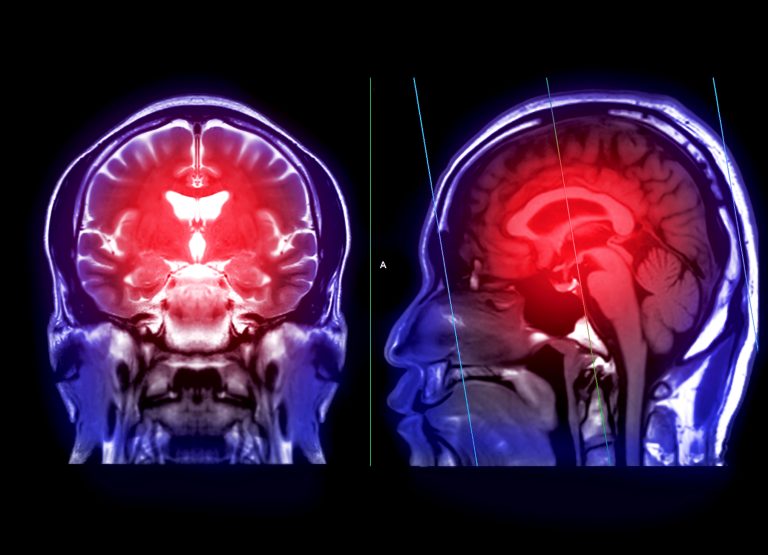
Your brain is a powerhouse. The ultimate command center controlling every thought, movement, sense, and memory, and regulating everything from breathing to digestion (and everything in between). So when this critical organ is under threat from something like a brain bleed, it’s understandably frightening.
A brain bleed (or brain hemorrhage) is a medical emergency that requires immediate attention, as it can be life-threatening. But here’s the good news: understanding the warning signs can truly save a life, your own or someone you love.
Let’s take a closer look at what happens when bleeding occurs in or around the brain, the types of conditions neurologists most often treat, and the symptoms you should never ignore.
The Basics of Brain Bleeds: What They Are and What Causes Them
A “brain bleed,” or intracranial hemorrhage, happens when a blood vessel inside the brain or between the brain and the skull ruptures, allowing blood to leak into the surrounding tissue.[1]
This bleeding increases intracranial pressure, which can damage cells and disrupt vital functions.
Brain bleeds can occur for several reasons; most often from a stroke or head injury, but also from uncontrolled high blood pressure, aneurysms, or blood-clotting disorders.[2] . Neurologists are often involved in diagnosing and managing these conditions, working closely with emergency and neurosurgical teams.
Brain Bleeds 101: Common Types You Should Know About
There are several main types of brain bleeds, named for where the bleeding occurs:
- Intracerebral hemorrhage: Bleeding within the brain tissue itself, usually due to high blood pressure or trauma.[3]
- Subarachnoid hemorrhage: Bleeding in the space between the brain and the thin tissues that cover it, usually from a ruptured aneurysm.[4]
- Subdural hematoma: Bleeding between the brain’s surface and its outer covering, commonly from a fall or head injury.[5]
- Epidural hematoma: Bleeding between the skull and the outermost brain membrane, often caused by trauma.[6]
The exact symptoms can vary depending on the type and location of the bleed, but all can become life-threatening within minutes or hours; therefore, recognizing the signs quickly is crucial.
Signs & Symptoms of a Brain Bleed You Should Not Ignore
Brain bleeds can appear suddenly or worsen gradually over time. Symptoms often mirror those of a stroke, concussion, or other neurological emergency. Watch for:
- A sudden, severe headache often described as “the worst headache of your life” or “thunderclap” [7]
- Nausea or vomiting that begins without another clear cause [2]
- Weakness, numbness, or tingling in the face, arm, or leg, especially on one side of the body [3]
- Difficulty speaking or understanding speech [8]
- Vision changes such as double vision, blurred sight, or loss of vision in one eye [1]
- Dizziness, balance problems, or loss of coordination [9]
- Confusion or sudden change in alertness, such as seeming “out of it” or unable to follow simple directions [10]
- Seizures with or without loss of consciousness [7]
- Loss of consciousness or extreme drowsiness, especially after a head injury [https://www.healthline.com/heal]
- Sudden, severe neck pain without an apparent cause [9]
- Sudden fatigue or overwhelming exhaustion without reason, especially with other brain bleed symptoms [6]
These symptoms don’t always appear all at once, but even just one of them, especially after trauma or in someone with risk factors like high blood pressure or blood-thinning medication, should be treated as an emergency.
Improve Your Chance of Surviving a Brain Bleed: Call 911
Don’t hesitate to call 911 if you or someone nearby experiences a sudden, severe headache, weakness, vision problems, confusion, or any of the other symptoms above. Do not wait to “see if it goes away.” Every minute counts. Rapid diagnosis with brain imaging (CT or MRI) can confirm the bleed and inform treatment decisions.[2]
Brain Hemorrhages Are Medical Emergencies & Knowing the Symptoms Could Save a Life
Brain bleeds (hemorrhages and hematomas) can happen suddenly and progress quickly, making fast action essential. If you or someone near you experiences a sudden, severe headache, weakness, confusion, vision changes, or any other symptoms discussed above, call 911 immediately—every minute counts when the brain is under pressure.
Neurologists play a vital role in diagnosing and managing brain hemorrhages, helping to prevent long-term complications and support recovery. Understanding what to look for (and acting fast!) can truly make the difference between life, severe disability, or death.
Knowing the signs of a brain bleed empowers you to act with confidence in the event of a crisis. Symptom awareness can truly save a life, including your own.
Disclaimer: This blog is intended for educational and informational purposes only and is not a substitute for professional medical advice, diagnosis, or treatment. Always consult your physician, neurologist, or other qualified healthcare provider with any questions you may have regarding a medical condition or treatment. Do not disregard professional medical advice or delay seeking it because of something you read on this blog.
Resources:
- Tenny S, Das JM, Thorell W. Intracranial Hemorrhage. [Updated 2024 Feb 17]. In: StatPearls [Internet]. Treasure Island (FL): StatPearls Publishing; 2025 Jan-. Available from: Accessed October 26, 2025. Available from: https://www.ncbi.nlm.nih.gov/books/NBK470242/
- Brain Bleed, Hemorrhage (Intracranial Hemorrhage). Cleveland Clinic [Internet]. Accessed October 26, 2025. Available from: https://my.clevelandclinic.org/health/diseases/14480-brain-bleed-hemorrhage-intracranial-hemorrhage
- American Stroke Association. Hemorrhagic Strokes (Bleeds). American Stroke Association [Internet]. Published 2019. Accessed October 26, 2025. Available from: https://www.stroke.org/en/about-stroke/types-of-stroke/hemorrhagic-strokes-bleeds
- Overview – Subarachnoid haemorrhage. NHS [Internet]. Published 2019. Accessed October 26, 2025. Available from: https://www.nhs.uk/conditions/subarachnoid-haemorrhage/
- Hvingelby E. What Is a Brain Bleed? Very Well Health [Internet]. Updated October 27, 2025. Accessed October 26, 2025. Available from: https://www.verywellhealth.com/a-subdural-hematoma-is-bleed-into-the-brain-1720023
- Giorgi A. Epidural Hematoma. Updated December 19, 2016. Accessed October 26, 2025. Available from: https://www.healthline.com/health/epidural-hematoma
- Brain Hemorrhage: Causes, Symptoms, Treatments. Reviewed June 24, 2024. Accessed October 26, 2025. Available from: https://www.webmd.com/brain/brain-hemorrhage-bleeding-causes-symptoms-treatments
- Moawad H. What to know about brain hemorrhage. Medical News Today [Internet]. Updated February 27, 2025. Accessed October 26, 2025. Available from: https://www.medicalnewstoday.com/articles/317080
- Nagpal K. Identifying Signs of Brain Haemorrhage: A Lifesaving Guide. PSRI Hospital [Internet]. Accessed October 26, 2025. Available from: https://psrihospital.com/identifying-signs-of-brain-haemorrhage-a-lifesaving-guide/#
- Understanding Brain Injury. Brain Injury Association of America [Internet]. Accessed October 26, 2025. Available from: https://biausa.org/brain-injury/under-standing-the-injury